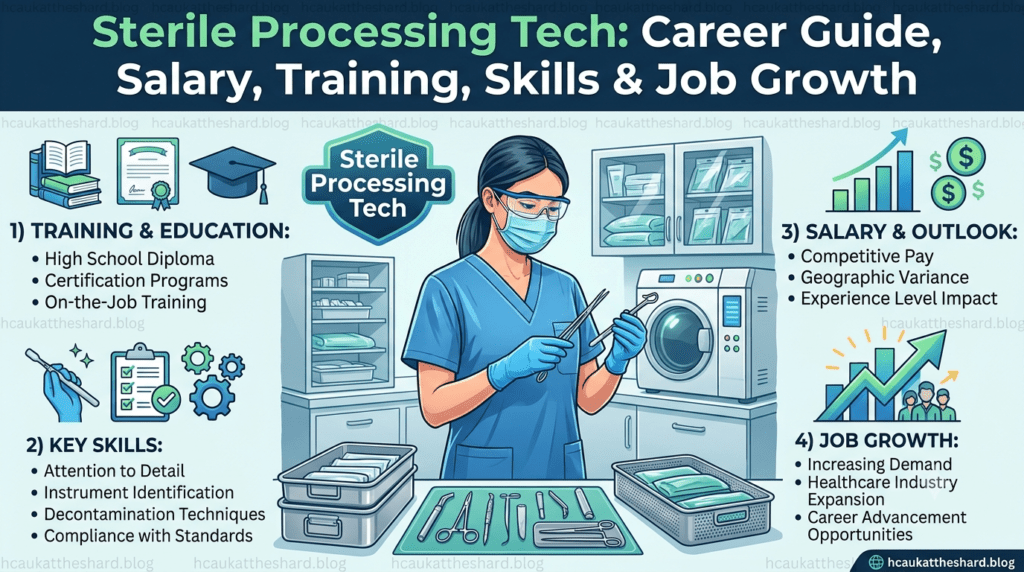

Healthcare facilities depend on many professionals to keep patients safe. One of the most important roles behind the scenes is the sterile processing tech. While doctors and nurses provide direct patient care, sterile processing technicians make sure medical tools are clean, sterile, and ready to use. Without their work, hospitals would face higher infection risks and patient safety concerns.
A sterile processing tech works in hospitals, surgical centers, clinics, and healthcare facilities. Their main responsibility is cleaning, disinfecting, inspecting, assembling, and sterilizing medical instruments. Every surgical procedure depends on properly prepared equipment. This makes the role both valuable and rewarding.
Many people choose this career because it offers a faster path into healthcare than nursing or medical school. Training programs are often shorter, and job demand continues to grow. If you are interested in healthcare, enjoy organized work, and want a career that helps people indirectly, becoming a sterile processing tech could be an excellent choice.
What Is a Sterile Processing Tech?
A sterile processing tech is a healthcare professional responsible for ensuring medical instruments are properly cleaned and sterilized before use. They work behind the scenes but play a major role in infection prevention and patient safety.
These professionals handle surgical tools, diagnostic equipment, and medical devices. After procedures, used instruments are collected and brought to the sterile processing department. The technician carefully cleans and inspects each item before sterilization.
Their work follows strict healthcare standards and safety protocols. Even a small mistake can affect patient outcomes. Because of this, attention to detail is one of the most important qualities for success in this field.
Sterile Processing Tech Biography Table
| Category | Details |
| Career Name | Sterile Processing Technician |
| Industry | Healthcare |
| Main Role | Cleaning and sterilizing medical instruments |
| Education Required | High School Diploma or Equivalent |
| Certification | CRCST, CSPDT or equivalent |
| Training Duration | 6 Months to 2 Years |
| Work Environment | Hospitals, Surgical Centers, Clinics |
| Average Work Hours | Full-Time, Shift-Based |
| Entry-Level Friendly | Yes |
| Patient Contact | Limited |
| Growth Potential | High |
| Key Skills | Organization, Attention to Detail, Safety Awareness |
| Career Advancement | Lead Technician, Supervisor, Manager |
Why Sterile Processing Technicians Are Important
Patient safety begins long before a surgery starts. Every instrument used during a procedure must be sterile. A sterile processing tech ensures that all tools meet safety standards before reaching the operating room.
Imagine a surgeon preparing for a complex operation. If a required instrument is missing or improperly sterilized, the procedure could face delays or safety risks. Sterile processing technicians help prevent these situations.
Their work directly supports surgeons, nurses, and healthcare teams. By reducing contamination risks, they contribute to better patient outcomes and lower infection rates.
Daily Responsibilities of a Sterile Processing Tech
The daily tasks of a sterile processing tech vary depending on the healthcare facility. However, most responsibilities include several key activities throughout the workday.
Technicians collect used instruments, clean them thoroughly, inspect for damage, assemble instrument trays, operate sterilization equipment, and store sterile supplies properly. They also maintain records and follow quality control procedures.
A typical shift requires careful attention and consistency. Every instrument must pass inspection before it can be used again. This process ensures healthcare professionals receive safe and reliable equipment.
Skills Needed to Become a Successful Sterile Processing Tech
Success in this career requires more than technical knowledge. A skilled sterile processing tech combines organization, patience, and problem-solving abilities.
Attention to detail is perhaps the most valuable skill. Technicians must identify damaged instruments, missing parts, or cleanliness concerns. Strong communication skills are also helpful because technicians work closely with surgical teams.
Time management is another important ability. Hospitals operate around the clock, and instrument availability is critical. Efficient workflow helps ensure procedures remain on schedule.
Education and Training Requirements
One attractive feature of becoming a sterile processing tech is the relatively short educational path. Most employers require a high school diploma or equivalent.
Many aspiring technicians complete specialized sterile processing training programs through vocational schools, community colleges, or healthcare institutions. These programs teach sterilization methods, infection control, anatomy basics, and instrument identification.
Hands-on experience is often included in training. This practical learning helps students gain confidence before entering the workforce.
Certification Options for Sterile Processing Technicians
Certification can improve employment opportunities and professional credibility. Many healthcare employers prefer certified candidates.
Popular certifications include the Certified Registered Central Service Technician (CRCST) and Certified Sterile Processing and Distribution Technician (CSPDT). These credentials demonstrate professional knowledge and commitment to industry standards.
Although certification requirements vary by employer and location, obtaining credentials often increases competitiveness in the job market.
Sterile Processing Tech Salary Expectations
Salary varies depending on experience, certification, location, and employer type. Entry-level technicians generally earn less than experienced professionals, but income often increases with skills and certifications.
Large hospitals and specialized surgical centers may offer higher compensation packages. Additional benefits can include healthcare coverage, retirement plans, overtime opportunities, and paid training.
As healthcare facilities continue expanding, salary potential remains attractive for many entering this field.
Job Outlook and Career Growth
The future looks promising for the sterile processing tech profession. Growing healthcare needs, aging populations, and increasing surgical procedures continue to create demand.
Healthcare facilities require trained professionals who understand sterilization standards and infection prevention practices. As a result, qualified technicians often find steady employment opportunities.
Experienced professionals can advance into leadership positions such as department supervisor, educator, quality assurance specialist, or sterile processing manager.
Work Environment and Schedule
Most sterile processing tech professionals work in hospitals. Others find employment in outpatient surgery centers, dental clinics, specialty healthcare facilities, and medical equipment companies.
The work environment is typically clean and highly organized. Technicians often stand for long periods and may lift instrument trays or equipment.
Because healthcare operates continuously, schedules can include evenings, weekends, overnight shifts, and holidays. Some professionals appreciate the flexibility that shift work provides.
Challenges of Being a Sterile Processing Tech
Like any healthcare career, this profession has challenges. The work requires precision and concentration throughout the day.
Technicians must follow detailed procedures and maintain strict compliance with safety standards. Fast-paced environments can create pressure during busy periods.
However, many professionals find the work rewarding because they know their efforts contribute directly to patient safety and successful medical procedures.
Benefits of Choosing This Career
A sterile processing tech career offers many advantages. Training programs are generally shorter than many healthcare professions, allowing faster entry into the workforce.
The field provides stable employment opportunities and room for advancement. Technicians gain valuable healthcare experience while supporting life-saving medical procedures.
Many professionals also enjoy the sense of purpose that comes from helping patients indirectly. Even without direct patient care, their work has a significant impact on healthcare quality.
Is Sterile Processing Tech a Good Career Choice?
For individuals seeking a healthcare career without spending many years in school, becoming a sterile processing tech can be an excellent option.
The profession offers job stability, meaningful work, career advancement opportunities, and strong demand. People who enjoy organization, responsibility, and teamwork often thrive in this environment.
If you value precision and want to contribute to patient safety, this career path deserves serious consideration.
Conclusion
The role of a sterile processing tech is essential in modern healthcare. These professionals ensure medical instruments remain safe, sterile, and ready for patient care. Their work helps prevent infections, supports surgical teams, and protects patient health every day.
With relatively short training requirements, certification opportunities, growing demand, and career advancement potential, sterile processing technology continues to attract new healthcare professionals. Whether you are exploring your first healthcare career or considering a professional change, becoming a sterile processing tech can provide a rewarding and stable future.
Frequently Asked Questions (FAQs)
1. What does a sterile processing tech do?
A sterile processing tech cleans, disinfects, inspects, assembles, and sterilizes medical instruments used in healthcare procedures.
2. How long does it take to become a sterile processing tech?
Most training programs take between six months and two years, depending on the institution and certification path.
3. Do sterile processing technicians need certification?
Certification is not always mandatory, but many employers prefer certified candidates because it demonstrates professional knowledge.
4. Where can sterile processing technicians work?
They commonly work in hospitals, surgical centers, outpatient clinics, dental facilities, and specialty healthcare organizations.
5. Is sterile processing tech a stressful job?
The role requires attention to detail and accuracy, but many professionals find the work manageable and rewarding.
6. Is sterile processing technology a good long-term career?
Yes. Healthcare demand continues growing, creating strong job opportunities and advancement potential for qualified technicians.