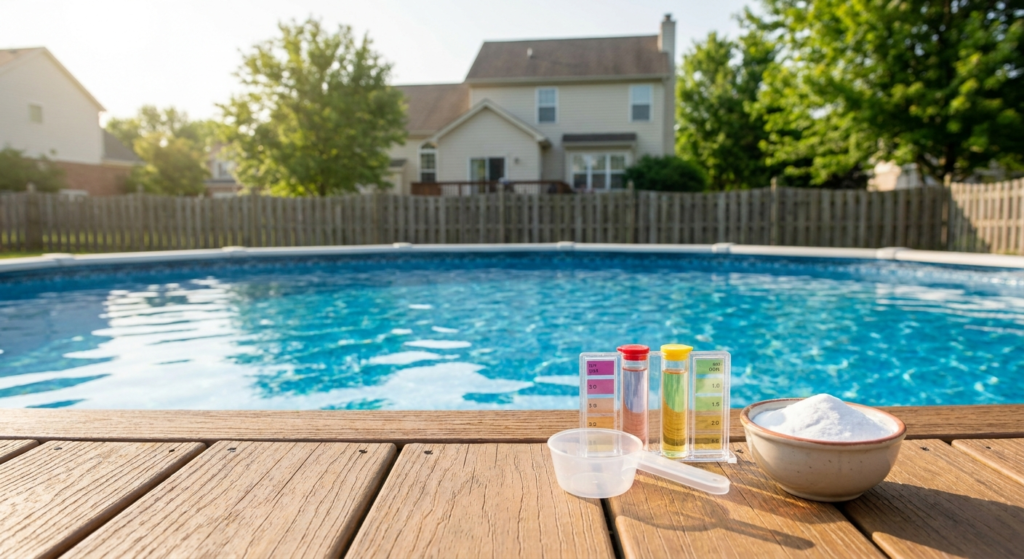

Keeping a pool clear is easier when each task has a purpose. Skimming removes visible debris. Brushing breaks up buildup on walls and steps. Filtration moves fine particles out of the water. Testing shows what the water needs before you add anything.
Baking soda can play a useful role in this routine. It is often used to raise total alkalinity, which helps pH stay more stable. When alkalinity is too low, pool water can become harder to manage, even if the pool looks clean.
The key is to use baking soda as a measured water balance tool, not as a cure for every pool problem. A careful routine helps you know when it is needed and when another issue is causing the trouble.
Why Alkalinity Matters
Total alkalinity acts like a buffer for pH. It helps prevent fast swings that can make the water uncomfortable or hard to sanitize.
When alkalinity is too low, pH may rise and fall quickly. That can lead to eye irritation, surface wear, corrosion, and sanitizer problems. It can also make pool care feel unpredictable because each adjustment seems to last only a short time.
When alkalinity is too high, pH may become difficult to lower. The water may also become cloudy or more likely to form scale. Balance matters more than simply adding more of anything.
Where Baking Soda Helps Most
Baking soda is most useful when a test shows that total alkalinity is below the recommended range. It can raise alkalinity without pushing pH as sharply as some stronger chemicals.
This makes it useful for small, steady corrections. It is especially helpful after heavy rain, frequent swimming, or refill water that changes the balance of the pool.
For a more detailed look at testing and dosing, baking soda for pool care is best understood as one part of a complete water balance plan.
When Baking Soda Is Not the Right Fix
Not every cloudy or uncomfortable pool needs baking soda. If algae is present, the pool needs proper sanitation and brushing. If debris is floating or settling on the floor, cleaning and filtration matter first.
If the filter is dirty, baking soda will not restore good circulation. If sanitizer is too low, baking soda will not make the water safe by itself.
This is why testing is so important. Guessing often leads to overcorrection. The water may look worse, and you may need more time to bring it back into balance.
A Simple Weekly Routine
Start the week by removing leaves, emptying baskets, and checking that the pump is moving water well. Then test pH, total alkalinity, and sanitizer.
If alkalinity is low, make a small adjustment. Let the pump run long enough to mix the water before testing again. Avoid adding large amounts at once.
Brush corners, steps, and shaded areas during the week. These spots often collect debris and can become early problem areas.
Before heavy weekend use, test again. More swimmers, more heat, and more sunlight can all increase the demand on the water.
How to Add Baking Soda Carefully
Always measure based on pool volume and test results. A common approach is to add only part of the estimated amount first. This lowers the risk of pushing alkalinity too high.
Broadcast it across the pool surface rather than dumping it in one spot. Keep the pump running so the water can circulate.
Wait before retesting. Testing too soon can give a misleading result because the water may not be fully mixed.
Common Signs to Watch
pH changes quickly after you adjust it. This can point to low alkalinity.
Water feels harsh even though it looks clear. Check pH and alkalinity before adding more sanitizer.
Cloudiness appears after chemical changes. The issue may be high pH, high alkalinity, poor filtration, or a combination of factors.
You keep making the same correction every week. This means there may be a pattern related to rain, refill water, pump time, or swimmer load.
Better Habits for Clearer Water
Pool care works best when it is steady. Small checks prevent large corrections.
Keep a simple log of test results. Write down the weather, swimmer use, and any adjustment you make. After a few weeks, patterns become easier to see.
Clean the filter on schedule. Good chemistry cannot make up for poor circulation.
Add one chemical adjustment at a time. Give the water time to respond before making another change.
Final Thoughts
Baking soda can be a helpful part of pool maintenance when alkalinity is low. It supports steadier pH and can make the water easier to manage.
The best results come from testing first, adding slowly, circulating well, and retesting before making another change.
When baking soda is used with regular cleaning, good filtration, and careful testing, it becomes a practical tool for keeping pool water clearer, safer, and more comfortable.