
Are you struggling to manage repetitive digital tasks? Many professionals lose hours daily manually extracting data, filling forms, or navigating complex software interfaces.
The term rabbit web describes a new wave of autonomous AI technology designed to handle these browser-based burdens for you. By mimicking human clicks and navigation, these systems transform how we interact with the internet.
Defining the “Rabbit Web” Concept
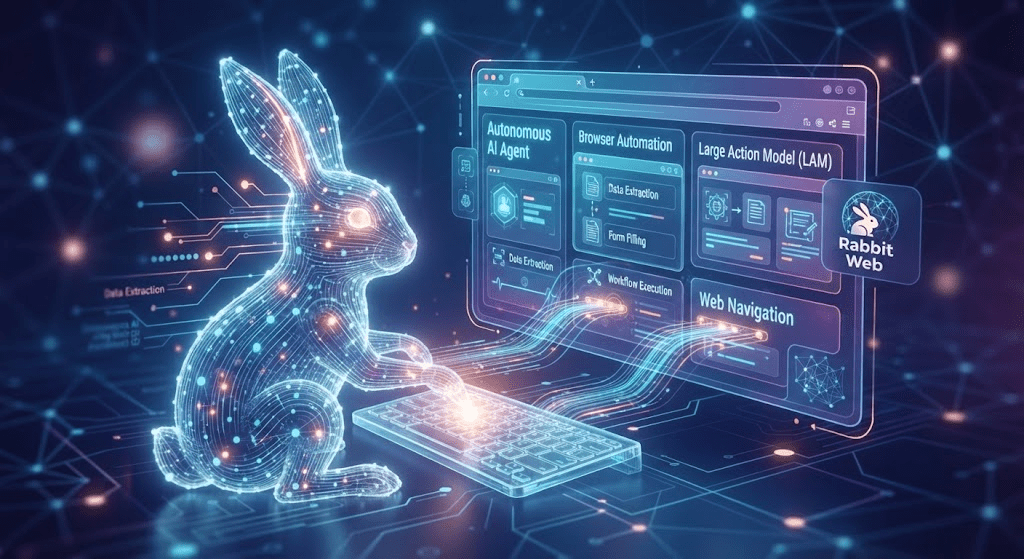
In the modern tech landscape, rabbit web typically refers to intelligent software agents capable of “browsing” the internet autonomously. These systems utilize Large Action Models (LAMs) or headless browser scripts to interact with websites just like a human would.
Whether you are a developer looking for automation frameworks or a user interested in AI assistants, these tools act as a bridge between intent and execution. They bridge the gap between simple text-based AI and actual task completion.
Comparing Different “Rabbit” Technologies
The term appears across several distinct niches in software development. To avoid confusion, refer to this breakdown of the most common applications.
| Technology Type | Primary Function | Ideal User |
| Autonomous Agents | Executes complex multi-step browser tasks | Data Analysts, Researchers |
| Dev Frameworks | Lightweight ASP.NET website construction | Web Developers |
| Browser Utilities | Programmatic Chrome/Chromium control | QA Testers, Scrapers |
| AI Hardware | Voice-activated digital task assistance | Consumer Tech Users |
Autonomous AI Agents for Browser Control
Recent open-source projects have popularized rabbit web agents as powerful automation tools. These systems use frameworks like Playwright or Puppeteer, integrated with Large Language Models (LLMs) like Gemini or GPT-4.
- Task Planning: The agent breaks down complex goals into logical steps.
- Element Interaction: It identifies buttons, forms, and links on a live webpage.
- Data Extraction: It pulls information from multiple sources into a structured format.
By installing these packages, you can automate sentiment analysis, price tracking, or comprehensive market research without writing custom code for every site.
The Rabbit r1 and the “Rabbit Hole” Portal
When people search for rabbit web, they often mean the ecosystem surrounding the Rabbit r1 device. Rabbit Inc. developed the “Rabbithole” web portal, which serves as a centralized hub for their AI services.
Users access this web interface to:
- Connect third-party apps like Spotify or Uber.
- Record “teach mode” sequences for the AI to replicate.
- Manage device settings and AI interaction history.
Development Frameworks: The Original “Rabbit”
Before the rise of AI agents, rabbit web referred to a lightweight framework for building websites using ASP.NET. While distinct from AI automation, this open-source tool remains relevant for specific legacy enterprise needs.
It focuses on:
- Loosely Coupled Hooks: Simplified event management.
- Unobtrusive Forms: Clean data handling between C# and JavaScript.
- MVC Architecture: Lightweight structure for rapid deployment.
How to Get Started with Web Automation
If you want to use rabbit web technology for personal productivity, you need a basic setup. Most autonomous agents run on Python environments.
1.Environment Setup:Local machine.
Install Python 3.10+ and set up a virtual environment to manage dependencies securely.
2.Clone the Repository:Using Git.
Download a trusted autonomous agent framework (like the open-source wchisasa/rabbit project) from GitHub.
3.Configure API Keys:Security step.
Create a .env file and input your LLM provider key (e.g., Google Gemini API) to power the agent’s decision-making.
4.Run Examples:Testing.
Execute a test script to confirm the agent can open a browser and perform simple navigation tasks.
Security Best Practices
Automating browser tasks involves sharing credentials or API keys with software agents. Always prioritize safety when using rabbit web automation tools.
- Use Dedicated Profiles: Run automation in a separate browser profile to isolate cookies.
- Review Code: Check open-source repositories for hardcoded secrets or suspicious network requests.
- Limit Permissions: Grant the agent access only to the specific sites required for your task.
Benefits of AI-Driven Web Navigation
Adopting these tools offers significant time-saving advantages for repetitive workflows.
- Consistency: Eliminates human error in data entry or form submission.
- Scalability: Allows one user to monitor dozens of websites simultaneously.
- Adaptability: Modern agents can adjust to UI changes better than rigid traditional scripts.
Frequently Asked Questions
Is “rabbit web” a specific browser?
No, it is a term used for multiple technologies, including AI automation agents and legacy ASP.NET frameworks. Some low-traffic mobile apps use the name “Rabbit Browser” for privacy, but they are unrelated to the AI technology.
Can these tools bypass CAPTCHAs?
Most rabbit web automation tools struggle with sophisticated bot protection. While some can handle basic interactions, advanced CAPTCHAs often block headless browsers.
Is using these agents legal?
Automation is legal, but you must adhere to a website’s robots.txt file and Terms of Service. Avoid aggressive scraping that could be classified as a Denial of Service (DoS) attack.
Which programming language is best?
Python is the industry standard for rabbit web automation due to its extensive libraries like Playwright, Selenium, and integration with major LLMs.
Does the Rabbit r1 use these web agents?
Yes, the Rabbit r1 utilizes “Large Action Models” to interact with web interfaces, which is conceptually similar to these autonomous browser agents.
Can I build my own agent?
Absolutely. Using frameworks like LangChain or AutoGPT alongside browser-automation tools allows you to create custom rabbit web agents tailored to your specific needs.
Final Thoughts
The evolution of rabbit web technology marks a shift toward a more proactive internet experience. Whether you leverage these tools to build websites or automate your daily research, the ability to control browser interfaces programmatically is a transformative skill.
Start small by experimenting with simple automation scripts, and always keep security at the forefront of your digital strategy.
You May Also Read More : rabbit web